
Glycolic acid has been in skincare formulas since the 1970s. It's been through every trend cycle and dermatologists are still recommending it. That's about as good a signal as an ingredient gets.
I've used it long enough to know what it actually does. Here's what I'd tell someone starting out.
What Is Glycolic Acid?
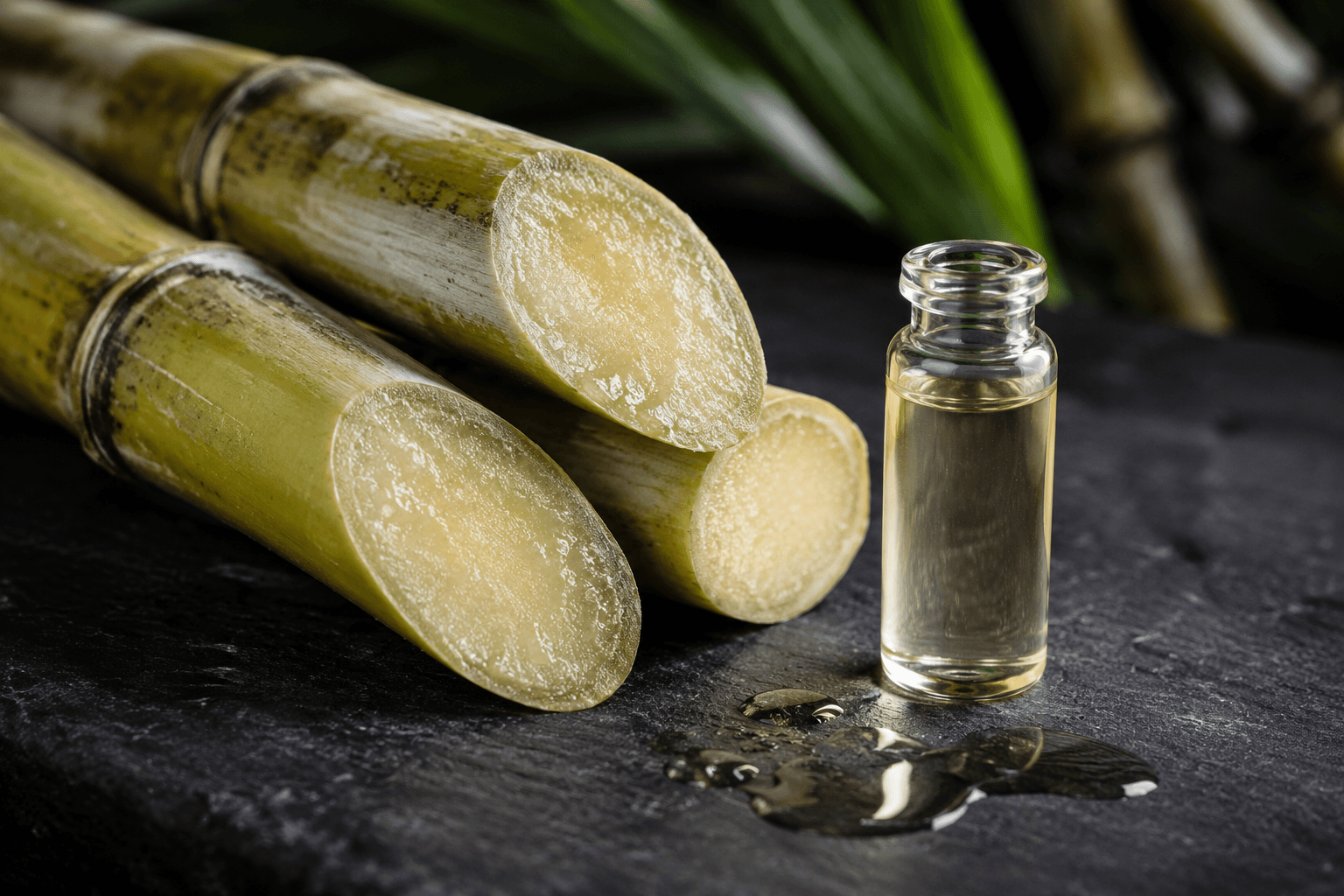
Glycolic acid is a chemical exfoliant made from sugar cane. The molecule is smaller than other common exfoliating acids, like lactic or mandelic. That size is what lets it get deeper into skin. That smaller size means it absorbs deeper into skin. Lactic and mandelic acid don't get as far down, so you typically see faster results from glycolic at the same concentration.
It loosens the bonds between dead skin cells through the full outer layer of skin. That same depth gives it the highest irritation potential of any AHA. It's not a gentle ingredient.
What Glycolic Acid Does for Skin
Exfoliates Without Physical Scrubbing
Glycolic acid loosens dead skin cells from your face without any scrubbing. I gave up on physical exfoliants years ago when I figured this out. They scrape unevenly and cause tiny cuts in the skin. You get redness and irritation instead.
Within 24 to 48 hours, skin looks cleaner, brighter, and more even. I notice it after a single use. The effect is more controlled than any scrub I've used and doesn't leave the redness that over-scrubbing does.
Brightens Dull Skin
Dull skin is mostly just dead cell buildup sitting on the surface. Glycolic acid takes that layer off and the newer cells underneath are more reflective. I notice a difference after a single use. For uneven tone I'd give it four to six weeks. The first few uses look like nothing is happening. I didn't believe it was working until about week two.
Reduces the Appearance of Fine Lines
Fine lines look worse when your skin is dry. I started noticing mine looked shallower after a few weeks of consistent use, and I think part of that is the hydration effect from keeping the surface exfoliated. You notice that fairly quickly. Collagen takes longer. Regular use at meaningful concentrations actually stimulates production in the dermis, and that's a structural change that compounds over months.
The collagen benefit requires sustained use at 10% or above. At lower concentrations used daily, you're mainly getting brighter, softer skin. That's genuinely useful on its own. It's just not the same as the deeper collagen work that builds up over months.
Fades Post-Acne Marks and Hyperpigmentation
Your skin sheds and replaces cells on its own timeline. Glycolic acid shortens that timeline. Dark spots are just discoloured cells sitting on the surface. With faster turnover they clear out sooner. For post-acne marks, sun spots, and brown patches, it's one of the better things you can buy without a prescription, especially if you're also using niacinamide or vitamin C. For a wider look at the topic, see skincare for hyperpigmentation.
It's not fast. Deeper pigmentation takes six to 12 weeks to shift. I've seen fresh post-acne marks clear up in that window, but spots that have been sitting there for years take longer.
Improves Product Absorption
A layer of dead skin on your face acts like a partial barrier for your other products. After glycolic, your serums and moisturisers actually get where they need to go. I always do glycolic first and layer everything else on top.
What Concentration to Use
5 to 10%: Good entry point for daily or near-daily use. Works for maintenance and mild concerns. The Ordinary's 7% toning solution is in this range.
10 to 20%: Two to three times per week. More effective for hyperpigmentation, fine lines, and texture. Needs a properly buffered pH formula or irritation becomes a real problem.
20 to 30%: At-home peel range. Results come faster, so does irritation. Not worth attempting without prior experience at lower concentrations.
30% and above: Professional-only. These belong in a clinic.
pH matters as much as the percentage number. Glycolic acid only works at a pH below 4. At higher pH levels, the free acid form that does the exfoliating isn't active. Most glycolic products are formulated around pH 3 to 4, which is the workable range between effective and tolerable.
How to Use It
Start at a lower concentration two to three times per week, evenings only. Glycolic acid increases photosensitivity, so evening use is the default. If you use it in the morning, SPF is not optional.
On nights I use glycolic, I go cleanser first, then the acid, then niacinamide or a hydrating serum, then moisturiser. SPF the next morning. For the full sequence, see the skincare routine order guide.
Don't use glycolic acid on the same evening as retinol until your skin has adapted to both separately. Both increase cell turnover in their own way. Stacking them before you've built tolerance is how you end up with a compromised barrier.
Buffering the Irritation
If it's still stinging at a lower concentration, put a thin layer of moisturiser on first, apply the glycolic on top of that, then moisturiser again at the end. Sounds fussy but it genuinely brings the burn down. I've told this to a lot of people who thought glycolic just wasn't for them.
As an Amazon Associate, I earn from qualifying purchases.Products Worth Trying
The Ordinary Glycolic Acid 7% Toning Solution runs about $12 and a bottle lasts for months. I apply it with a cotton pad after washing my face at night. I've had this one in my routine for years and it's the first thing I'd recommend to someone who's never used a chemical exfoliant before.
Paula's Choice Skin Perfecting 8% AHA Gel Exfoliant is a step up in formulation quality. Green tea and chamomile in the formula help buffer the irritation. Good if the Ordinary version felt slightly too drying. At around $35 for 100ml you're paying more, but if your skin is reactive the difference in formula shows up.
Pixi Glow Tonic (5%) is a lower concentration in a gentler base. A solid starting point for sensitive or reactive skin. Works well as a daily maintenance option.
Sunday Riley Good Genes (5%) is considerably more expensive but includes lactic acid alongside glycolic and a more complete supporting formula. If budget isn't a constraint and you want a treatment rather than a maintenance product, it's a real step up.
Who Should Use It
Glycolic acid works well for most skin types. The exceptions are worth knowing.
Oily and combination skin tends to respond well because it keeps pores from clogging. It's also where I'd look first for sun damage, rough texture, or skin that just looks flat and tired. Those issues tend to get more noticeable with age, and glycolic is one of the better OTC tools for all of them. I'd put most people in the worth-trying category before steering them away from it.
The cases where I'd slow down: very sensitive or reactive skin should start at 5% and limit frequency. Active rosacea is a real concern because exfoliating acids can trigger flares. Don't use it on open acne lesions. I tried that once and it just stings. If something else in your routine has been irritating your skin lately, glycolic is going to make it worse.
A damaged barrier or a recent chemical burn means glycolic is off the table until things have healed. I always stop glycolic two weeks before any laser appointment or in-office treatment.
Frequently Asked Questions
Can I use glycolic acid every day?
At 5 to 7%, daily evening use is doable once your skin has settled into it. I'd start with two or three nights a week. Something stronger than 10% needs a couple of days off between sessions.
Does glycolic acid help with acne?
For blackheads and general congestion, glycolic is a solid choice. It keeps pores from backing up. Cysts and inflamed breakouts respond better to salicylic acid. It's oil-soluble and reaches inside the pore. Glycolic works on the surface, not inside it. I use both, just on separate nights.
Can I use glycolic acid with vitamin C?
Technically yes, just not together in the same step. Both work best at a low pH and layering them tends to be too much for most skin. I do vitamin C in the morning and glycolic at night.
Does glycolic acid thin the skin?
No. This comes up constantly and it's not accurate. Glycolic acid removes dead cells from the surface. It also drives collagen production in the deeper layers. Used consistently, you end up with better-structured skin. The thinning myth probably started with the irritation and flaking people get in the first few weeks. If that happens to you, it doesn't mean your skin is getting thinner. It means it's adjusting.
How long before I see results?
Brightness shows up within 24 to 72 hours. Texture improvement takes 2 to 4 weeks. Hyperpigmentation takes 6 to 12 weeks. Collagen stimulation effects take 12 or more weeks of consistent use.